

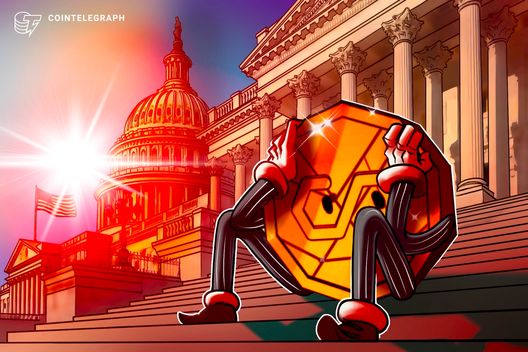
TL;DR: A Coinbase executive delivered a sharp warning to the Senate, arguing that poorly crafted U.S. stablecoin legislation risks weakening dollar-pegged digital assets and could inadvertently boost China's digital yuan, potentially eroding America's global financial leadership.
A Critical Juncture for U.S. Financial Supremacy
Washington D.C. – A high-ranking Coinbase executive delivered a stark warning to lawmakers this week, asserting that a misstep in crafting U.S. stablecoin legislation could inadvertently cede significant global financial influence to China and its burgeoning digital yuan. The cryptocurrency exchange’s policy chief cautioned that proposed changes to regulatory frameworks risk undermining the very dollar-pegged assets critical to maintaining American economic leadership on the digital frontier.
The message from the digital asset giant is clear: as Congress grapples with the complex task of regulating the nascent cryptocurrency market, particularly stablecoins, it must avoid pitfalls that could stifle innovation or make U.S.-backed digital assets less competitive globally. The stakes, according to Coinbase, extend far beyond the crypto market, touching upon national security, economic leverage, and the long-term dominance of the U.S. dollar.
The Silent Power of Stablecoins
For many outside the cryptocurrency world, stablecoins remain an abstract concept. Yet, these digital assets, designed to maintain a stable value relative to a fiat currency like the U.S. dollar, have become a cornerstone of the broader digital economy. They act as a critical bridge between volatile cryptocurrencies and traditional finance, facilitating rapid, low-cost international transactions and providing liquidity across digital markets.
Their importance stems from their peg to the dollar. By making it easier and cheaper to transact in a digital dollar, stablecoins effectively extend the dollar's reach and utility into new technological realms, reinforcing its status as the world's reserve currency. "U.S. dollar stablecoins have a powerful role to play in extending American economic leadership," the Coinbase executive reportedly told Senate committees, emphasizing that well-regulated, robust stablecoins could ensure the dollar's continued relevance in an increasingly digital world.
China's Digital Yuan: A Challenge to Dollar Hegemony
While the U.S. debates its regulatory approach, China has been aggressively pushing forward with its own state-backed digital currency, the digital yuan, or e-CNY. Unlike decentralized stablecoins, the e-CNY is a central bank digital currency (CBDC) issued and controlled by the People's Bank of China. Its rollout has been comprehensive, involving extensive trials across major cities and integration into everyday transactions.
A particularly noteworthy development is China's move to allow interest-bearing wallets for the digital yuan, a feature that could make the e-CNY significantly more attractive for users and institutions seeking returns on their digital holdings. This strategy poses a direct competitive threat to non-interest-bearing dollar stablecoins, potentially luring users towards the Chinese alternative.
According to a report from Reuters earlier this year, China's efforts with the e-CNY are not merely about domestic payment efficiency but are part of a broader strategy to internationalize the yuan, reduce reliance on the U.S. dollar-dominated global financial system, and potentially circumvent the reach of U.S. sanctions. The BBC has extensively covered the geopolitical implications, highlighting how a successful e-CNY could provide Beijing with unprecedented surveillance capabilities over financial flows and enhance its influence in emerging markets through initiatives like the Belt and Road.
The Legislative Tightrope: Innovation vs. Regulation
The U.S. Senate faces a delicate balancing act. On one hand, there's a clear need for regulation to protect consumers, prevent illicit financing, and ensure financial stability – concerns amplified by past crypto market volatility. On the other, overly restrictive or ill-conceived legislation could stifle the very innovation that has propelled the U.S. to the forefront of the digital economy.
The Coinbase executive's warning specifically highlighted the risk of legislative changes that could inadvertently weaken U.S. dollar stablecoins, making them less competitive against a state-backed rival like the e-CNY. This could happen if regulations impose excessive capital requirements, create undue operational burdens, or introduce uncertainty that drives stablecoin development and usage offshore.
Analysts quoted by the Associated Press have long highlighted the tension between fostering innovation and implementing robust oversight in nascent tech sectors. In the case of stablecoins, the fear is that a legislative “misstep” could lead to a scenario where U.S. innovation is either bottlenecked or forced to relocate, diminishing America's competitive edge.
A Looming Geopolitical Battle for Digital Finance
The competition between U.S. dollar stablecoins and China's digital yuan isn't just about technological superiority; it's a battle for the future architecture of global finance. If the U.S. falters in providing a clear, supportive regulatory framework for dollar-pegged digital assets, it risks creating a vacuum that China's e-CNY could readily fill.
Such a shift would have profound geopolitical implications. It could weaken the effectiveness of U.S. sanctions, dilute America's financial soft power, and create an alternative financial system that operates outside the traditional Western-dominated infrastructure. CNN has previously reported on congressional efforts to regulate crypto, underscoring the bipartisan recognition of these high stakes.
The path forward requires careful consideration: legislation that fosters transparency, accountability, and stability, without inadvertently hobbling the very assets that can secure the dollar’s digital future. The Coinbase warning serves as a timely reminder that in the race for digital financial leadership, the U.S. cannot afford to cede ground through inaction or regulatory misjudgment.
Editorial Note from PPL News Live:
The interplay of technology, finance, and geopolitics has rarely been more vivid than in the stablecoin debate. What might seem like a niche discussion about digital currencies holds profound implications for the U.S.'s standing on the global stage. As Congress deliberates, the urgency of finding a balanced, forward-looking regulatory path for stablecoins becomes undeniable. The world is not waiting.
Edited by: Aisha Rahman - World Affairs
Sources
- Reuters
- Associated Press (AP)
- AFP
- BBC News
Published by PPL News Live Editorial Desk.