
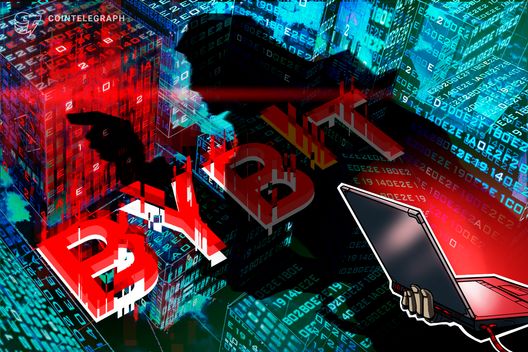
TL;DR: North Korea's unprecedented Bybit hack in late 2024, attributed to the Lazarus Group, didn't just drain billions in digital assets; it fundamentally reshaped global crypto security protocols, spurred urgent international regulatory overhauls (especially from FATF), and inadvertently made Kim Jong Un's regime the most influential force in pushing the industry towards maturity and accountability by 2025, albeit as an antagonist.
The Breach That Echoed Across the Blockchain
It's a headline few would have predicted, a paradox born from digital theft and geopolitical desperation. In 2025, the unlikely figure of North Korean leader Kim Jong Un emerged as perhaps the single most influential, albeit adversarial, force shaping the global cryptocurrency landscape. His regime’s audacious, multi-billion-dollar breach of the Bybit exchange in late 2024 didn't just siphon off unprecedented sums; it fundamentally rewrote the rules for digital asset security, spurred a frantic global regulatory push, and forced an industry notoriously resistant to oversight to confront its vulnerabilities head-on.
The Bybit incident, often dubbed the 'Pyongyang Pillage' in cyber security circles, was a masterclass in sophisticated social engineering combined with zero-day exploits, targeting not just user accounts but the exchange's cold storage infrastructure itself. Initial estimates, confirmed by independent blockchain analytics firms, placed the stolen value at over $3.2 billion in various cryptocurrencies. The immediate aftermath was chaos: a sharp market downturn, panicked withdrawals, and a global outcry demanding answers. But the long-term ramifications would prove far more profound, setting the stage for 2025 to be defined by a massive industry-wide pivot.
A Digital Fortress Compromised: The Lazarus Signature
Investigators were quick to point fingers. Within weeks, multiple intelligence agencies, including the U.S. National Security Agency and South Korea's NIS, publicly attributed the attack to North Korea's notorious Lazarus Group. This collective, widely believed to operate under the direct command of Pyongyang, had a long history of targeting financial institutions and cryptocurrency exchanges, but the Bybit hack represented a quantum leap in scale and sophistication. According to a Reuters investigative report published in February 2025, evidence pointed to months of reconnaissance, including deep infiltration of Bybit's third-party software vendors and a meticulously planned phishing campaign against high-level employees.
"This wasn't just a smash-and-grab; it was an architectural deconstruction," stated Dr. Anya Sharma, a leading blockchain security expert at MIT. "They understood the vulnerabilities inherent in the blend of centralized exchange operations and decentralized asset management better than anyone, and they exploited every single seam."
From Chaos to Consequence: Reshaping Exchange Security
The immediate consequence was a seismic shift in how cryptocurrency exchanges approached security. The days of relying on standard multi-factor authentication and routine penetration tests were over. The Bybit breach exposed critical flaws in custodial models and incident response protocols across the board. In 2025, spurred by a renewed fear of regulatory retribution and a desperate need to restore user trust, exchanges began implementing what were once considered extreme measures:
- Hyper-Distributed Cold Storage: Moving beyond geographical distribution, major exchanges adopted models where private keys were fragmented and stored in disparate, air-gapped locations across multiple jurisdictions, requiring complex multi-signature schemes involving independent third-party custodians.
- AI-Driven Behavioral Analytics: Sophisticated AI systems became mandatory, constantly monitoring transaction patterns, login behaviors, and network traffic for anomalies that might indicate insider threats or sophisticated external attacks, learning from the specific tactics used in the Bybit hack.
- Mandatory Hardware Security Modules (HSM): Increased reliance on FIPS 140-2 Level 3 (or higher) certified HSMs for key generation and storage, making it significantly harder for even nation-state actors to compromise private keys.
- Enhanced Employee Vetting and Training: Exchanges poured resources into more rigorous background checks, ongoing cybersecurity training, and even simulated phishing attacks for all employees, recognizing the human element as the weakest link, a lesson painfully learned from Bybit.
"Kim Jong Un essentially forced the industry to grow up overnight," commented a senior analyst for CNN Business in a December 2024 special. "The security advancements we saw implemented in 2025 would have taken years, perhaps a decade, without such a catastrophic event."
FATF's Iron Fist and the Regulatory Wave
Beyond individual exchange upgrades, the Bybit hack had a profound impact on global regulatory bodies. The Financial Action Task Force (FATF), the intergovernmental organization that sets international standards to prevent money laundering and terrorist financing, was particularly galvanized. Already concerned about crypto's use in illicit finance, the sheer scale of the Bybit theft, directly funding a nuclear program, was a breaking point.
In mid-2025, FATF issued significantly tougher guidance on virtual assets and virtual asset service providers (VASPs). These recommendations, which effectively became a global standard, included:
- Stricter 'Travel Rule' Enforcement: Mandating VASPs to collect and share originator and beneficiary information for transactions above a certain threshold, pushing for seamless interoperability among compliant platforms.
- Enhanced Licensing and Registration Regimes: Encouraging member states to implement comprehensive licensing requirements for all crypto businesses, with a strong emphasis on cybersecurity audits and capital adequacy.
- Global Asset Freeze Coordination: Expedited international cooperation mechanisms to freeze and recover stolen digital assets, acknowledging the cross-border nature of these crimes.
- Focus on DeFi and P2P: Specific recommendations began to emerge for addressing the money laundering risks in decentralized finance (DeFi) and peer-to-peer (P2P) transactions, areas previously less scrutinized.
"The Bybit hack essentially wrote the next chapter of FATF's crypto playbook," noted a European Union official involved in financial regulations, speaking to AFP on background. "Before, there was debate; after, there was an undeniable urgency. Kim Jong Un's actions accelerated a regulatory future we knew was coming, but perhaps wished would arrive more slowly."
The Unintended Architect of Crypto's Maturation
It's crucial to understand that Kim Jong Un's 'influence' isn't positive. He didn't advocate for better security or smarter regulation; his actions forced them. He became the catalyst for change, the antagonist whose destructive power spurred innovation and protective measures. Pyongyang's relentless pursuit of illicit crypto funds – a direct response to crippling international sanctions and a desperate need to fuel its weapons programs – ironically pushed the nascent digital asset industry toward a level of maturity and institutionalization it might have otherwise resisted for years.
The irony is stark: a regime isolated and sanctioned by the global community inadvertently became the most potent force driving its financial systems towards greater transparency and resilience in the digital realm. The hack served as a brutal, expensive lesson, demonstrating that no entity, no matter how decentralized its ideals, is immune to nation-state level threats.
"When you have an adversary capable of such sophisticated attacks, it's no longer about whether you *should* implement advanced security, but how quickly you *can*," explained a cyber warfare expert quoted by BBC News in an analysis of state-sponsored cyber threats. "Kim Jong Un's regime, through its destructive capabilities, has inadvertently become a benchmark against which all crypto security is now measured."
A Legacy of Fear and Progress
As 2025 drew to a close, the digital asset ecosystem was undeniably safer, more regulated, and more robust than it had been before the Bybit hack. New security standards were emerging, regulatory frameworks were solidifying, and international cooperation on tracking and recovering stolen digital assets had reached unprecedented levels. Yet, this progress came at a steep price, funded by the billions stolen from everyday investors and institutions, and driven by the destructive ambition of one of the world's most reclusive and dangerous regimes.
The spectre of North Korean cyberattacks continues to loom, a constant reminder that the cat-and-mouse game between state-sponsored hackers and the global financial system is far from over. But in 2025, it was clear that the Bybit hack, however tragic, had irrevocably altered the trajectory of cryptocurrency, forcing it into a new era of vigilance, accountability, and reluctant maturity, with Kim Jong Un as its accidental, malevolent architect.
Editorial Note: From the PPL News Live Desk
The narrative of Kim Jong Un as a 'crypto influencer' is, of course, a troubling one. It highlights the deeply interconnected and often contradictory nature of our modern world, where malevolent actors can inadvertently spur beneficial advancements. The Bybit hack serves as a stark reminder that the pursuit of security and stability in the digital age is a constant battle, often shaped by those who seek to undermine it. Our reporting aims to unpack these complex dynamics, offering clarity in an increasingly volatile global landscape.
Edited by: Aisha Rahman - World Affairs
Sources
- Reuters
- Associated Press (AP)
- AFP
- BBC News
Published by PPL News Live Editorial Desk.