
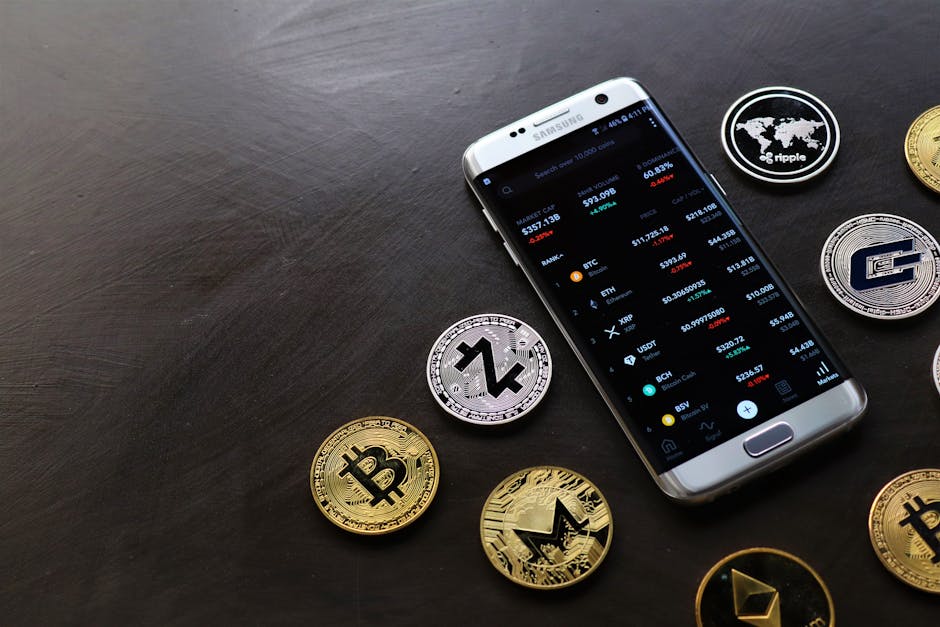
TL;DR: French banking behemoth BPCE is reportedly set to integrate in-app cryptocurrency trading directly into its mobile banking applications, allowing millions of customers to buy and sell Bitcoin, Ethereum, Solana, and USDC. This move signals a significant step in the convergence of traditional finance and digital assets, positioning BPCE among the pioneering European banks to offer direct crypto access, driven by evolving regulations and growing customer demand.
Introduction
The landscape of traditional finance (TradFi) is continually converging with the burgeoning world of digital assets. A recent report indicates that BPCE, one of France's largest banking groups, is preparing to launch an integrated cryptocurrency trading service directly within its existing banking applications. This reported development would allow millions of its customers across various brands, including Banque Populaire and Caisse d'Épargne, to seamlessly buy and sell major cryptocurrencies like Bitcoin (BTC), Ethereum (ETH), Solana (SOL), and the stablecoin USDC from their familiar banking interface.
If confirmed, BPCE's initiative marks a significant strategic pivot, reflecting a broader trend among established financial institutions to embrace digital currencies. It represents a noteworthy moment for cryptocurrency adoption in Europe, potentially setting a precedent for other major banks to follow suit in offering direct, regulated access to the crypto market.
Key Developments
The core of the report suggests that BPCE's ambition is to make cryptocurrency investment as accessible as any other banking product. By integrating trading capabilities directly into its mobile banking apps, the group aims to remove common barriers to entry such as navigating unfamiliar crypto exchanges or setting up new accounts with third-party providers. This 'one-stop-shop' approach is designed for convenience and familiarity, leveraging the trust customers already place in their banking provider.
Specifically, the reported offering will encompass four prominent digital assets: Bitcoin (BTC), the market leader and store of value; Ethereum (ETH), the foundational blockchain for decentralized applications; Solana (SOL), known for its high-speed transactions; and USD Coin (USDC), a stablecoin pegged to the US dollar, often used for its stability in volatile markets. This selection suggests a balanced approach, offering exposure to both blue-chip cryptocurrencies and a stable asset for diversification or transactional purposes.
The scale of this endeavor is substantial. BPCE serves an estimated 30 million customers across France, meaning the potential user base for this new service is vast. Such a move by a systemically important financial institution could significantly accelerate mainstream adoption of cryptocurrencies within the French and wider European markets.
Background
BPCE, an acronym for Banque Populaire Caisse d'Épargne, is France's second-largest banking group. It operates a vast network of retail banks, including the Banque Populaire and Caisse d'Épargne brands, offering a full range of banking and financial services to individuals, professionals, and businesses. Its significant market presence lends considerable weight to any venture into novel financial products like cryptocurrency trading.
This reported foray into crypto trading doesn't happen in a vacuum. It aligns with a discernible shift within the European financial sector. Regulatory clarity, particularly with the advent of the Markets in Crypto-Assets (MiCA) regulation within the European Union, is providing a more structured environment for financial institutions to operate in the crypto space. MiCA, set to be fully implemented in stages from late 2024, establishes a comprehensive regulatory framework for crypto-asset issuers and service providers, addressing issues like consumer protection, market integrity, and financial stability. This regulatory certainty significantly de-risks institutional engagement with digital assets.
Globally, banks have shown varying degrees of interest in crypto. While some, particularly in jurisdictions with clear frameworks like Switzerland or Germany, have already launched similar services, many major European banks have remained cautious. BPCE's reported move would position it as a frontrunner, potentially influencing its peers in the region to re-evaluate their own crypto strategies.
Quick Analysis
BPCE's reported decision carries multifaceted implications. For customers, it offers a simplified, potentially more secure, and regulated pathway into crypto investment, bypassing the complexities of independent crypto exchanges. This could significantly lower the barrier to entry for novice investors and those wary of the perceived risks associated with less regulated platforms. The convenience of managing traditional and digital assets within a single app is a powerful value proposition.
For BPCE, this move represents a strategic adaptation to evolving financial markets and customer demands. It allows the bank to capture a share of the burgeoning crypto market, retain technologically savvy customers, and potentially attract new demographics interested in digital assets. Furthermore, it positions BPCE as an innovative and forward-thinking institution, crucial in an increasingly competitive financial landscape.
However, challenges remain. Regulatory compliance, though clearer with MiCA, will still require significant operational adjustments. Managing the inherent volatility and risks associated with cryptocurrencies, including cyber security and anti-money laundering (AML) protocols, will be paramount. Educating customers about the risks involved in crypto investments will also be a key responsibility. Furthermore, BPCE will face competition not only from existing crypto exchanges but also from fintechs and potentially other banks that may soon follow suit.
What’s Next
Should these reports materialize, the immediate next steps for BPCE would involve securing final regulatory approvals and undertaking a robust technical integration process. A phased rollout might be expected, starting with specific customer segments or a pilot program before a full public launch. User education campaigns on the mechanics and risks of crypto trading will be essential.
Looking ahead, this initial offering could serve as a foundation for BPCE to expand its digital asset services. This might include supporting a wider range of cryptocurrencies, offering advanced trading features, or even exploring services like staking, decentralized finance (DeFi) access, or tokenized securities in the future. The impact on the broader European banking sector will be significant; BPCE's success could pressure other financial institutions, both in France and across the EU, to accelerate their own digital asset strategies, further blurring the lines between traditional banking and the crypto economy.
FAQs
Q1: What is BPCE and why is its reported move into crypto significant?
A1: BPCE is France's second-largest banking group, encompassing brands like Banque Populaire and Caisse d'Épargne. Its reported launch of in-app crypto trading is significant because it's a major traditional financial institution directly integrating digital assets, offering regulated and convenient access to millions of customers. This signals mainstream acceptance and could accelerate wider adoption in Europe.
Q2: Which cryptocurrencies are reportedly included in BPCE's offering?
A2: The initial offering is reported to include Bitcoin (BTC), Ethereum (ETH), Solana (SOL), and USD Coin (USDC). This selection provides exposure to leading cryptocurrencies and a stablecoin.
Q3: How does this align with European regulations?
A3: This move is largely facilitated by the upcoming Markets in Crypto-Assets (MiCA) regulation in the European Union. MiCA provides a comprehensive regulatory framework for crypto-asset services, offering greater legal certainty and a structured environment for banks like BPCE to operate within the crypto space.
Q4: What are the potential benefits for BPCE customers?
A4: Customers could benefit from increased convenience, as they can manage both their traditional banking and crypto investments within a single, familiar app. It also offers a potentially more secure and regulated environment compared to some independent crypto exchanges, backed by the trust and infrastructure of their bank.
Q5: Will other French or European banks likely follow suit?
A5: BPCE's reported initiative could very well act as a catalyst. If successful, it may pressure other major financial institutions in France and across the European Union to accelerate their own digital asset strategies to remain competitive and meet evolving customer demands, further driving the convergence of TradFi and crypto.
PPL News Insight
The reported entry of BPCE into direct, in-app crypto trading is more than just a headline; it's a potent symbol of the accelerating institutionalization of digital assets. For years, the traditional financial world viewed cryptocurrencies with a mix of skepticism and apprehension. Now, driven by regulatory clarity, undeniable market demand, and the strategic imperative to innovate, major players like BPCE are not just acknowledging crypto but actively integrating it into their core offerings.
This development underscores a crucial shift: the conversation is no longer *if* banks will engage with crypto, but *how* and *when*. BPCE's reported decision to offer BTC, ETH, SOL, and USDC directly through its established banking apps democratizes access while simultaneously offering a veneer of safety and familiarity that independent crypto exchanges often struggle to convey to the uninitiated. It validates the asset class in the eyes of millions of traditional banking customers, potentially unlocking a new wave of adoption.
While the path won't be without its challenges—from navigating complex regulatory nuances to managing technological integrations and customer education—BPCE's reported foresight positions it strongly for the future of finance. This isn't just about offering a new product; it's about a fundamental redefinition of what a bank can be in the digital age. It's a clear signal that the future of money is hybrid, and traditional institutions are finally ready to build the bridges.
Sources
Article reviewed with AI assistance and edited by PPL News Live.