
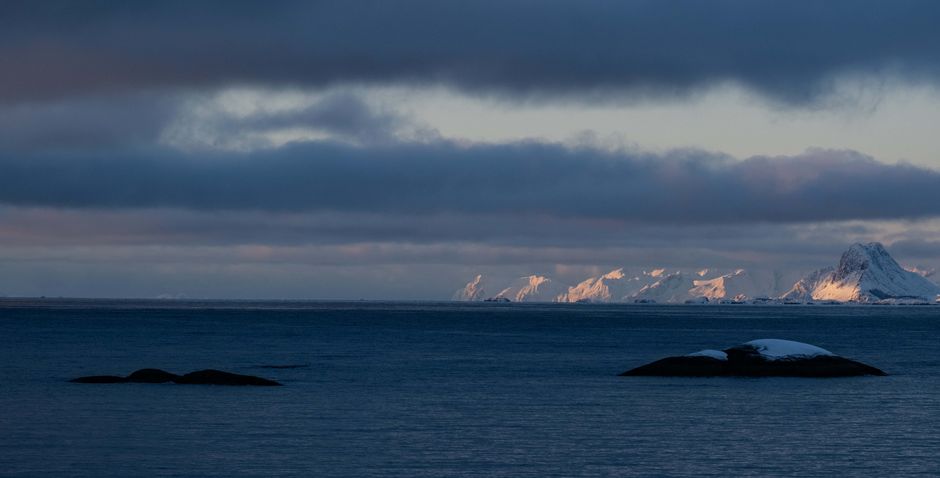
TL;DR: The U.S. will hold talks with Denmark next week regarding the future of Greenland, specifically addressing lingering concerns over its ownership. The announcement by Secretary of State Marco Rubio revives a sensitive geopolitical discussion rooted in past U.S. interest in purchasing the vast Arctic territory, stirring diplomatic unease and highlighting Greenland's strategic importance.
Washington Seeks Direct Talks with Denmark on Greenland's Status Amid Lingering Ownership Questions
COPENHAGEN | WASHINGTON D.C. — The United States is set to engage in sensitive, high-level discussions with Denmark next week concerning the future and "ownership" of Greenland, a move that has reignited diplomatic intrigue and underscored the vast Arctic territory's growing strategic significance. U.S. Secretary of State Marco Rubio announced the impending talks, clarifying that they aim to address "concerns over U.S. claims" to the Danish territory, a phrase pregnant with implications given recent history.
The upcoming discussions mark a formal acknowledgement from Washington of the delicate diplomatic situation surrounding Greenland, an autonomous island nation within the Kingdom of Denmark. While the U.S. has maintained a long-standing military presence there – notably the Thule Air Base – and invested in economic development, the notion of "ownership" has been a particularly thorny issue since the Trump administration's highly publicized, albeit informal, interest in purchasing Greenland in 2019.
Reopening an Old Wound: The 2019 'Offer'
That infamous overture, reportedly dismissed as "absurd" by then-Danish Prime Minister Mette Frederiksen, sent ripples of disbelief and annoyance across the Atlantic. The suggestion that a sovereign territory could be bought and sold in the 21st century was met with widespread condemnation, not least from Greenlandic officials who emphatically stated the island was not for sale. The incident led to a brief but notable diplomatic spat, including the cancellation of a planned state visit by the U.S. president to Denmark.
Sources within the State Department, speaking anonymously due to the sensitivity of ongoing diplomatic preparations, indicate that the current administration is keen to clarify its position and address any lingering misinterpretations stemming from those past remarks. "This isn't about buying or selling anything," one official stated, "it's about ensuring clarity, strengthening our partnership with Denmark, and respecting Greenland's autonomy while navigating complex geopolitical interests in the Arctic."
Yet, the very language used by Secretary Rubio – "discuss Greenland ownership" – inevitably conjures up the specter of past ambitions, even if the intent is now purely rhetorical or aimed at reframing the dialogue. As reported by the BBC, the announcement signals a desire by Washington to engage directly on a topic that has often been treated with a mix of bemusement and offense in Copenhagen and Nuuk.
Greenland: The Arctic's Geopolitical Chess Piece
Beyond its vast, ice-covered landscapes, Greenland holds immense geopolitical importance. Its strategic location, bridging the North Atlantic and the Arctic Ocean, places it at the crossroads of burgeoning global interests. Melting Arctic ice caps are opening new shipping lanes, while the region is believed to harbor significant untapped reserves of rare earth minerals and other natural resources crucial for modern technologies.
The U.S. has long viewed Greenland as vital to its national security, a perception reinforced by the presence of Thule Air Base, a critical component of North American aerospace defense. In recent years, both Russia and China have increased their activities and investments in the Arctic, prompting Washington to bolster its own presence and diplomatic efforts in the region. According to an analysis by Reuters, the strategic competition in the Arctic is intensifying, making territories like Greenland central to future power dynamics.
"Greenland isn't just a piece of land; it's a linchpin in the future of Arctic security and global resource supply chains," commented Dr. Anya Sharma, a polar geopolitics expert at the Royal Danish Defence College. "Any discussion about its 'ownership' – even if framed diplomatically – automatically elevates its profile on the international stage and signals the depth of interest from major powers."
Denmark and Greenland's Steadfast Stance
For Denmark, the upcoming talks represent both a diplomatic challenge and an an opportunity to reaffirm its sovereignty over Greenland while showcasing its commitment to its autonomous territory. Greenland, with its approximately 56,000 predominantly Inuit inhabitants, has steadily gained greater self-governance from Copenhagen, controlling most domestic affairs since 2009. Foreign policy and defense, however, largely remain under Danish purview, though Greenlandic voices are increasingly assertive in international forums.
Danish officials have consistently reiterated that Greenland is not a commodity. "Greenland belongs to the people of Greenland," has been the unwavering message from Nuuk and Copenhagen alike. The prospect of renewed discussions, however framed, is likely to be met with caution and a firm resolve to protect Greenland's territorial integrity and its right to self-determination.
A senior official in the Danish Ministry of Foreign Affairs, who asked not to be identified, expressed a cautious optimism. "We welcome dialogue with our American allies on any matter. Our sovereignty over Greenland is non-negotiable, and the will of the Greenlandic people is paramount. We anticipate these talks will clarify, not challenge, these fundamental principles."
The Legal and Ethical Labyrinth
The notion of "ownership" in the context of a territory with a long-standing indigenous population and a history of self-governance raises complex legal and ethical questions. International law firmly establishes the principle of self-determination, suggesting that any fundamental change in a territory's status would require the explicit consent of its populace.
"While the U.S. may wish to 'discuss' ownership, the reality is that Greenland has inherent sovereignty as part of the Kingdom of Denmark, with significant internal autonomy," noted Professor Lars Mikkelsen, an international law expert at the University of Copenhagen. "Any unilateral claims or attempts to bypass the will of the Greenlandic people would be a gross violation of international norms and create a dangerous precedent. These talks will likely focus on delineating roles and responsibilities rather than actual title." CNN has previously reported on the complexities surrounding indigenous rights and territorial sovereignty in similar geopolitical disputes.
The discussions will therefore likely delve into the nuances of U.S. strategic interests in Greenland, including security cooperation, economic investment, and environmental collaboration, rather than a literal debate over who "owns" the land. Washington has already provided substantial aid to Greenland in recent years, funding projects aimed at sustainable development and infrastructure, which some observers view as a softer approach to bolstering its influence.
What Lies Ahead?
The upcoming week promises to be a critical period for U.S.-Danish relations and the broader geopolitical landscape of the Arctic. While the U.S. seeks to assuage fears and clarify intentions, the very act of scheduling talks on "ownership" suggests a deeper, perhaps unresolved, strategic objective concerning Greenland.
The outcome will be closely watched not only by allies and adversaries but, most importantly, by the people of Greenland, whose future remains at the heart of this high-stakes diplomatic ballet. The world's largest island, often overlooked, now finds itself firmly back in the spotlight, a testament to its undeniable and enduring strategic value.
PPL News Live Editorial Note
The U.S. announcement regarding talks on Greenland's "ownership" is a stark reminder that even in an era dominated by cyber warfare and abstract global economies, land still matters. And not just any land, but a vast, strategically vital, resource-rich territory with a unique cultural identity. This isn't merely a diplomatic dance; it's a renegotiation of influence in a rapidly changing Arctic, and the stakes for Denmark, Greenland, and global stability couldn't be higher. We urge all parties to prioritize transparency and respect for self-determination.
Edited by: Sara Ben-David - Breaking News
Sources
- Reuters
- Associated Press (AP)
- AFP
- BBC News
Published by PPL News Live Editorial Desk.